Charlie’s Angels: hair as a short route to character.

The 70s don’t have a reputation as hair’s golden age. Men mostly grew it long and left it alone: shaggy, sideburned, and styled by nothing more than neglect. Women had the blow-out and the perm. Add the Afro, the shag and the feathered flick, and it was a decade of big, loose, deliberately uncontrolled hair. By the end, punk had arrived with its own statement: spiked, dyed and hacked about on purpose.
Yet hair still had huge cultural power. And no show proved it better than Charlie’s Angels.
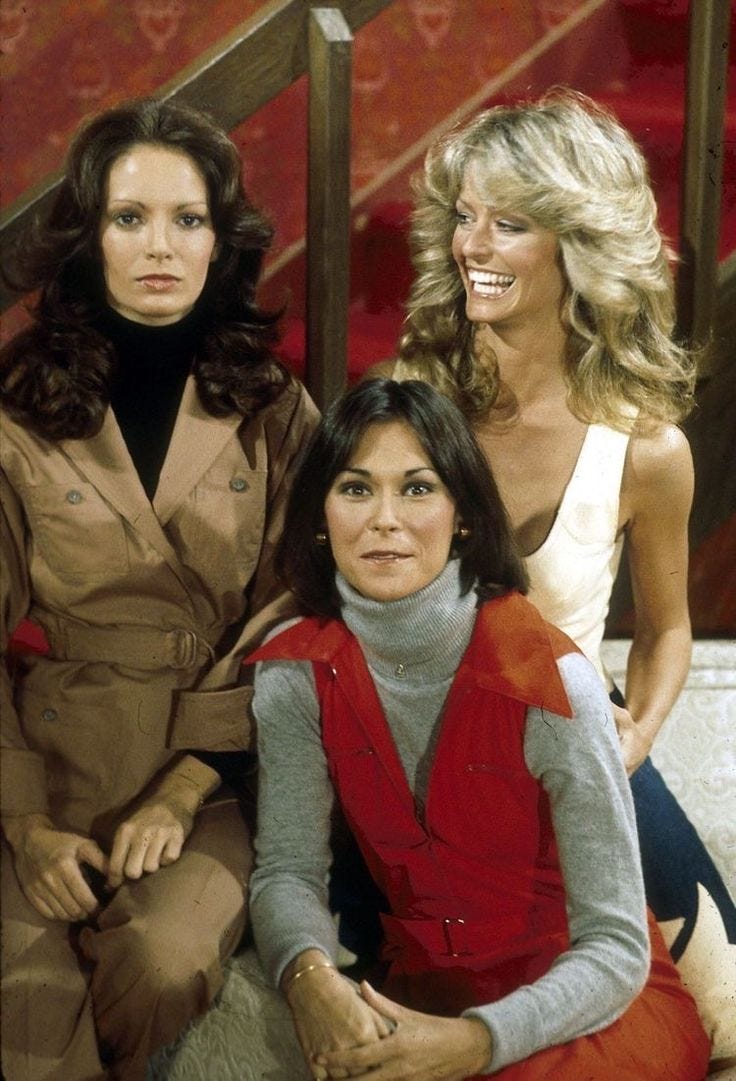
It was one of the biggest shows on TV, and it was built on hair. Three women, three very different characters, working together as private detectives. You could tell who was who before anyone spoke.
Jill Munroe (Farrah Fawcett) had the big blonde blow-out, the feathered flick that launched a million copycats. She was the fun one: sporty, a bit dizzy, endlessly likeable.
Kelly Garrett (Jaclyn Smith) had long, wavy, controlled brunette hair. She was quieter, more considered and more sensual.
Sabrina Duncan (Kate Jackson) had dark, shoulder length straighter hair. She was the leader: sensible, logical and in total control.
Each one played to a stereotype, and everyone at the time had a favourite. That was the point. Three characters, three hairstyles, three ways in for the audience.
We’ve seen it played out many times since.
The Spice Girls are the classic case. Scary had big, free, natural hair. Sporty had practical, scraped-back hair. Baby had soft blonde pigtails. Posh had a sleek, shiny bob. And Geri was the wild child outsider with the red hair. Five girls, and you never needed a caption.
Sex and the City did the same for four friends. Carrie’s tousled, curly blonde hair said creative and a bit chaotic. Charlotte’s neat, polished brunette waves said traditional and romantic. Miranda’s short red cut said practical and career-first. Samantha’s glossy blonde mane said confident and sexual. Different decade, same trick.
Why does it work? Stories lean on archetypes and stereotypes because they let a character land with the broadest possible audience, quickly. And hair is the most efficient signal we have. It communicates identity, personality and sexuality before a character says a word. That’s no accident. It’s what we’ve done with our hair for as long as there have been people to read it.
It’s highly relevant to building a brand where advertising requires lightning quick communications. Symbols, signs and stereotypes are a way of communicating a story instantly and hair plays an important role.
Discussion about this post