

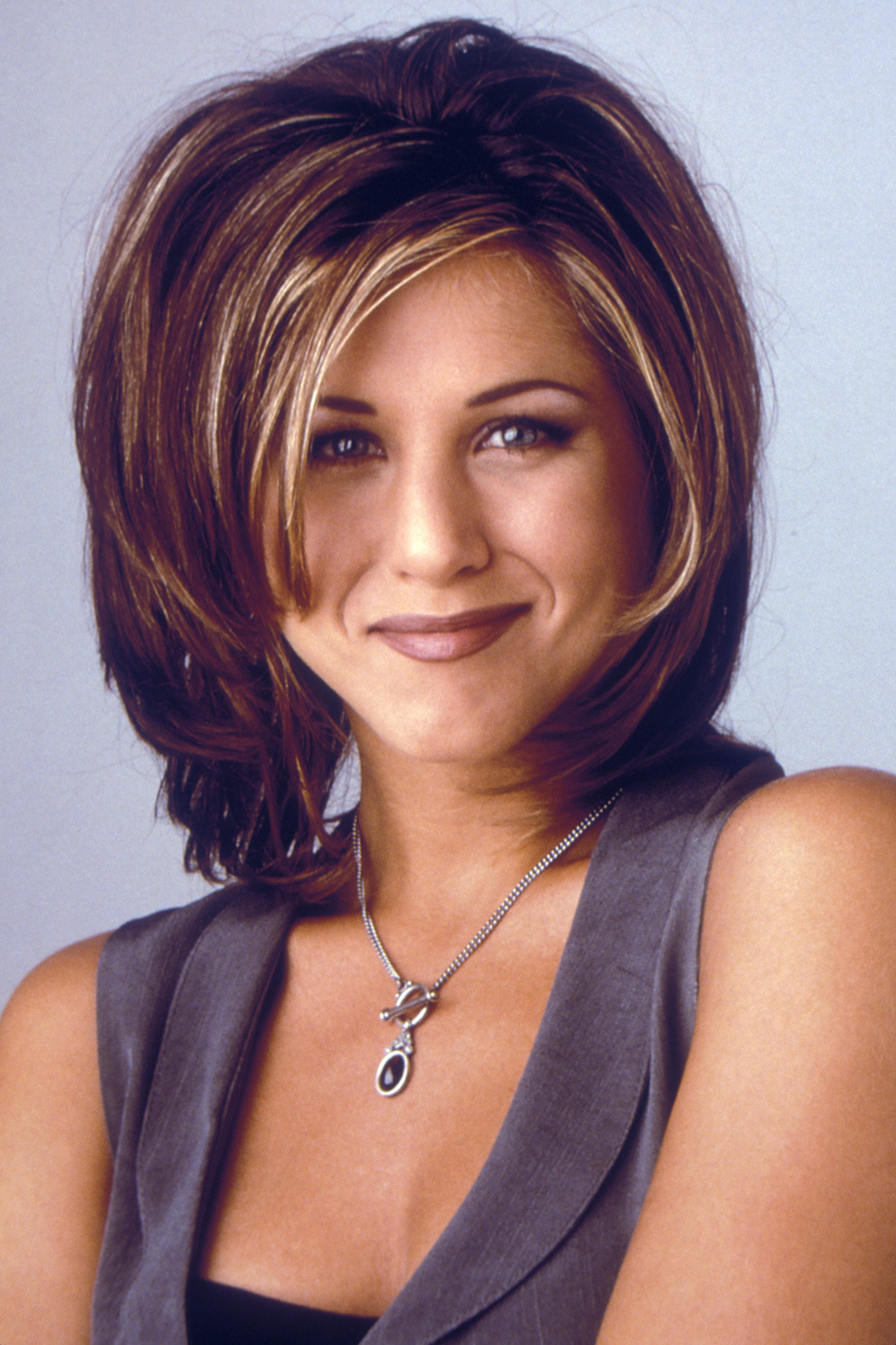
Say “the Rachel” to almost anyone of a certain age and they know exactly what you mean. No explanation needed. That is the real test of famous hair.
Hair becomes famous when it stops being personal and becomes public. It turns into a sign, something that can be recognised and repeated. And cultural memory is ruthless about what it keeps. It does not choose the most flattering styles. It chooses the clearest ones.
Elvis is the proof. The high black pompadour, the ducktail, the sideburns that grew longer as the career went on. Parents in the fifties worried about the hair almost as much as the hips. When he went into the army in 1958, the haircut was understood as a symbolic taming. The hair tracked the whole arc, from rebellion to iconography.
Bowie did the opposite. His hair was never consistent, and that was the point. Each reinvention arrived first as a haircut. The red, angular Ziggy told you something alien was coming before a note was played.
Then there is Jennifer Aniston, whose layered, highlighted cut on Friends went from screen to salon to street. Millions of women asking for it were not just ordering a haircut. They were reaching for an identity: effortless, relatable, warmly imperfect.
As someone who has spent more than thirty years in advertising, I find this fascinating. These are the best-performing brand assets ever created, and none of them were designed by a brand team. They work because they are distinctive, easy to recall and instantly legible.
Try this: Name a famous hairstyle without naming the person. If you can do it in three words, it has done the job. If you can’t, it hasn’t.