

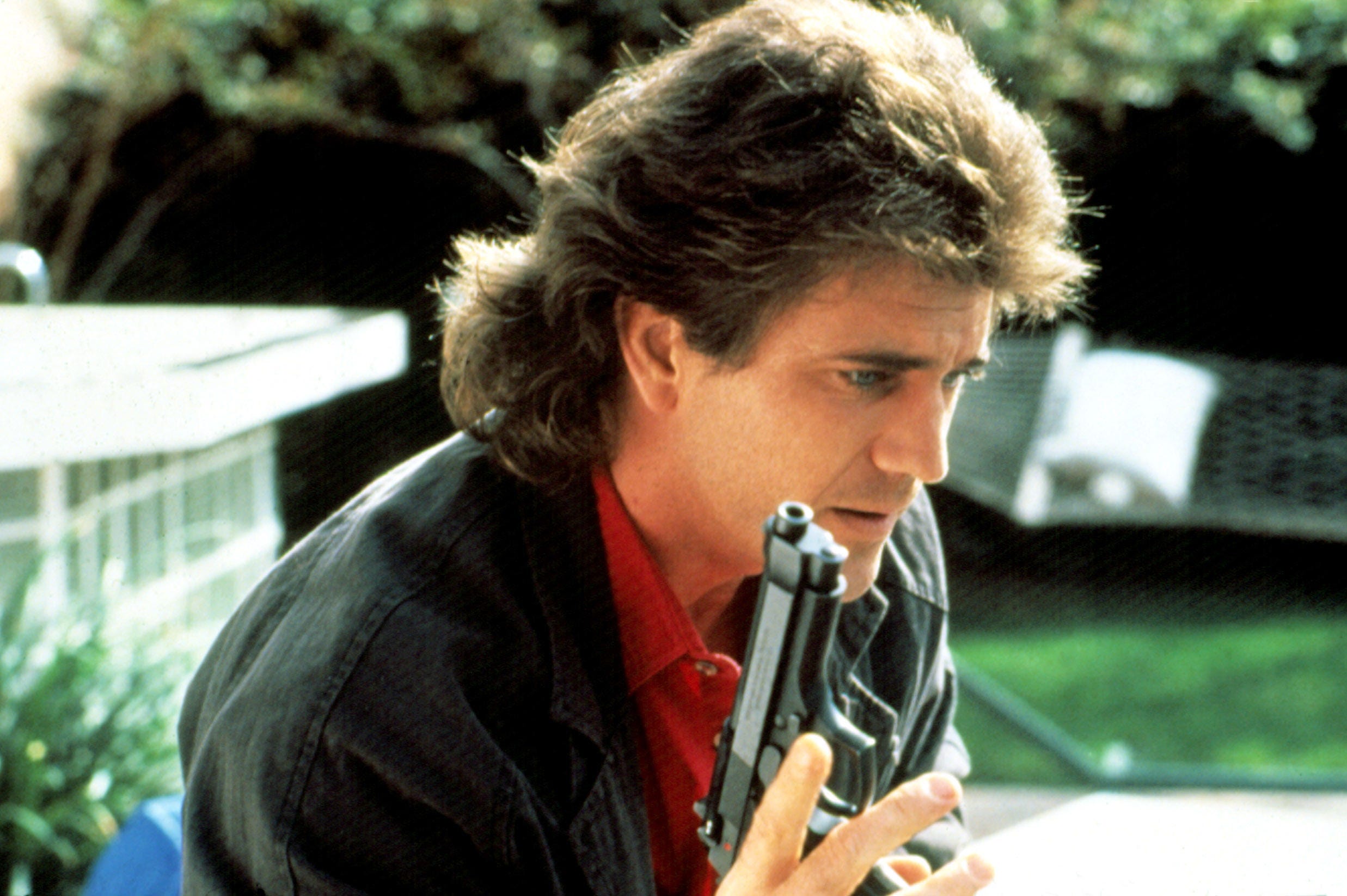
The mullet has no country of birth, and the word itself is barely thirty years old. Short at the front, long at the back is one of those solutions humans seem to keep arriving at independently, which maybe the point.
The evidence for the ancient version is patchy, so what is solid and what is folklore.
Here is what the sources give us:
• Ancient Greece. The first literary mullet seems to be in Homer’s Iliad, where the Abantes, spearmen, wear their hair cropped at the front and long at the back. Greek statues from the 6th century BCE are also often said to show the cut.
• Imperial Rome. Wikipedia cites Suetonius saying the emperor Tiberius wore his hair “rather long at the back”, a family habit.
• Byzantium, 6th century AD. The historian Procopius, in his Secret History, describes young hooligans backing the chariot-racing faction who cut their hair short at the front and left it long behind, the so-called “Hunnic” look. It was, in effect, a football-ultras haircut, 1,500 years early.
Why would it keep turning up? The practical logic is easy to see: keep the hair out of your eyes, keep the neck warm, and don’t give an enemy a handful of hair to grab. That is an interpretation, but it is exactly the sort of thing evolution-minded people find hard to resist.
And the word?
The name arrived late. “Mullet-head” was an American insult for a fool from at least the mid-1800s, and Mark Twain used it in Huckleberry Finn (1884). For the haircut, the Oxford English Dictionary credits the Beastie Boys, whose 1994 song “Mullet Head” turned an ironic joke into a name.
So: ancient haircut, brand-new name, and a name that began life as an insult. Hold that thought.
The famous mullets
The modern mullet was a rock-and-roll invention long before it was a joke. The sources agree on roughly this order of events:
• Tom Jones, 1965. Wikipedia notes him wearing one on The Ed Sullivan Show.
• David Bowie, 1972. The orange Ziggy Stardust cut is the usual starting gun. Hair historian Janet Stephens says it “pushed the margins of hair and dress”.
• Paul and Linda McCartney, 1973. A famous photo shows them in matching mullets. Rod Stewart is the other 1970s name that always comes up.
• The 1980s. MTV and Hollywood did the rest: Richard Marx, Patrick Swayze in Road House, Mel Gibson in Lethal Weapon and Billy Ray Cyrus later became the face of the cut in the early 1990s.
• Later wearers. Jerry Seinfeld sported one on prime-time TV for years, and Brad Pitt is said to credit his Thelma & Louise audition cut. Scarlett Johansson and Rihanna have both gone mullet, and Dacre Montgomery’s Billy in Stranger Things sent people into salons.
The list moves. It starts with the coolest people on the planet and ends with men in tracksuits at the football. Nobody dropped the mullet. It slid down the status ladder.
How it became a joke
The 1980s peak saw the start of the fall. When a look is everywhere, it stops signalling anything, and then the wrong people start wearing it. It is thought that the decline is down to the cut being adopted by the trucker-hat-and-sandals crowd, with ridicule following close behind.
Then came the mockery. The Beastie Boys’ 1994 song is described there as the “death blow”, and the joke kept running: a 1998 song by the Vandals, the 2001 documentary American Mullet, and the early-2000s Joe Dirt films, cemented it as the “white trash” label. Mullet-wearers were no longer trendsetters.Mel Gibson cut his off in Lethal Weapon 4 (1998), the end of an era.
It is a classic case of a status signal working in reverse. Once the cut spreads beyond the group it flatters, the group abandons it.
The backlash even reached governments. Iran banned it in 2010 among a list of “decadent Western cuts”. A hairstyle banned by a state is, by definition, a hairstyle that means something.
The comeback
The revival didn’t arrive in one go. It crept back, first as irony and then, slowly, as sincerity.
• 2005. Young men in Moscow started adopting it.
• 2010 to 2015. Hockey’s “playoff mullet”, made famous by Patrick Kane, kept it alive in sport, followed by Phil Kessel, Mike Gundy and James Conner later in the decade
• 2019. Anna Sui’s autumn show put every model in a spiky, technicolour mullet wig, and the cut was on New York runways. After Stranger Things, one London stylist said she was cutting “at least one or two a week”
• 2020. i-D called it “the year of the mullet”, crediting lockdown and closed salons. Which seems about right: nothing grows a mullet like a pandemic.
• Since. The USA Mullet Championships began in 2020, and in 2023 Tami Manis of Tennessee received a Guinness World Record for a 172.72 cm mullet. Peso Pluma made it his signature in 2023, and the modern mullet has been a defining cut of 2026, typically paired with fades and tapers.
The new version is not the old one. The 1980s original was blow-dried and bouffant. Today’s is more often cropped, textured and tapered.
So what does the Mullet signal?
1. Class, sort of. The stereotype is real. The mullet became tied to the Bogan in Australia and New Zealand, to the Yinzer of western Pennsylvania, and to the “white trash” and “southern idiot” caricatures. But the history above shows it began in glam rock and on emperors, so “working class” is a reputation it acquired, not a birthright. Its modern revival, one writer argues, draws on “working-class style” and is knowingly borrowed by people who are not.
2. Rebellion. The mullet says “I don’t think like you do”, a deliberate embrace of bad taste. That fits the Iranian ban, and the thread running from Bowie to punk and skateboarding.
3. Gender and sexuality. Wikipedia notes the style became a public identifier in lesbian culture from the late 1980s, and described it as playing with gendered hair norms. Short on top, long behind: it won’t sit neatly in either category.
4. Tribe. Football casuals, hockey players, metalheads, skaters, miners’ towns like Kurri Kurri with its annual Mulletfest. Like any hairstyle, it is mostly a badge that says which group you belong to.
And the evolutionary angle? Hair is one of the cheapest, most visible signals a human can change. Dress it as the group does and you tell everyone whose side you’re on. That is also why a style is ruined when the wrong group adopts it: the signal changes meaning.
So what is the mullet really?
A cut that has been invented, abandoned and rediscovered for perhaps 2,500 years, worn by emperors, chariot-racing hooligans, glam-rock aliens, hockey players and the occasional bored Londoner in lockdown. Mocked for thirty years, then wanted again.
That is the real lesson. A haircut doesn’t carry a fixed meaning. It carries whatever the people wearing it, and the people judging it, agree it means. Sometimes that’s status, sometimes it’s rebellion, and sometimes it is simply a good solution to keeping your neck warm.